


Concert LED Display Screen Manufacturer | Stage LED Wall
Learn about concert LED display types, pixel pitch, brightness, refresh rate, and how to choose the right screen for concerts and live events.
1. High Visual Impact: An LED stage backdrop screen delivers bright colors, sharp images, and dynamic video effects, making the stage more attractive and visually powerful. It helps create a strong first impression for concerts, live shows, exhibitions, conferences, and other stage events.
2. Seamless Large-Screen Display: LED stage screens can be combined into a large display wall with smooth splicing and clean visual performance. This creates a professional stage background without obvious gaps, making the whole setup look more complete and impressive.
3. Flexible Size and Design: LED stage backdrop screens can be customized according to different stage sizes, event layouts, and creative requirements. Whether it is a small indoor stage or a large concert venue, the screen can be designed to match the space perfectly.
4. Wide Viewing Angle: A high-quality LED stage screen provides clear visuals from different viewing positions. This allows audiences seated in the front, side, or back areas to enjoy consistent image quality and a better viewing experience.
5. Easy Content Management: The content on an LED stage backdrop screen can be changed quickly, including videos, images, animations, live camera feeds, brand logos, and event themes. This makes it easy for organizers to adjust the visual content for different performances or programs.
6. Strong Stage Atmosphere: When combined with lighting, music, and live performance effects, an LED stage backdrop screen can create a more immersive and emotional atmosphere. It helps turn a simple stage into a memorable visual experience for every audience.
If your event venue needs to build a stage, then the LED display can make your stage more vivid.
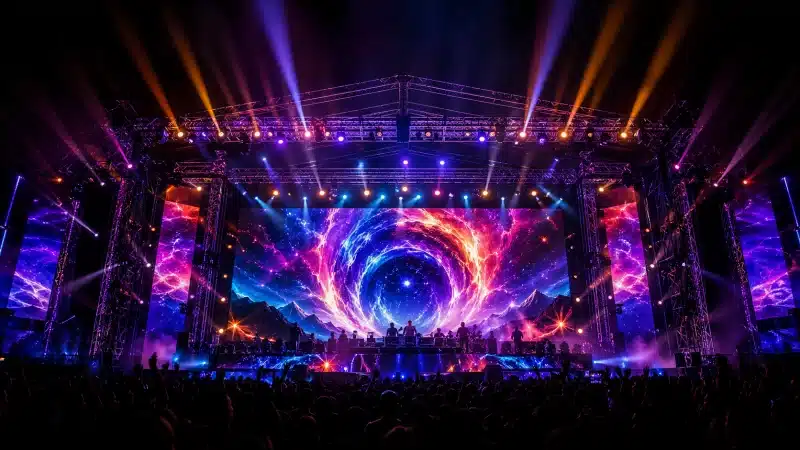
LED stage backdrop displays are ideal for concerts, music festivals, DJ shows, and live entertainment events.
They can present dynamic video effects, artist close-ups, music visuals, lyrics, animations, and real-time camera feeds to match the rhythm of the performance.
With high brightness, vivid colors, and seamless large-screen display, they help create a powerful stage atmosphere and make the audience feel more involved in the show.

For conferences, product launches, annual meetings, award ceremonies, and brand events, LED stage backdrop displays provide a professional visual solution for presenting key information.
They can show company logos, speaker backgrounds, product videos, presentation slides, countdowns, live broadcasts, and event themes clearly on a large screen.
Compared with printed backdrops, LED displays are more flexible because the content can be changed quickly for different sessions, speakers, or branding needs.

In theaters, churches, auditoriums, cultural centers, and performance halls, LED stage backdrop displays can be used as digital scenery to replace traditional stage backgrounds.
They allow stage designers to create different environments, such as city views, natural landscapes, abstract effects, or story-based scenes, without rebuilding physical sets.
This makes scene switching faster, reduces setup work, and gives performances a richer visual expression, especially for musicals, drama shows, worship events, and live productions.

LED stage backdrop displays are also widely used in exhibitions, trade shows, booth presentations, and promotional activities.
A bright and eye-catching LED screen can attract visitors from a distance and help the booth stand out in a crowded exhibition hall. Businesses can use it to play product videos, brand introductions, customer cases, interactive content, and live demonstrations.
This not only improves the visual impact of the booth, but also helps visitors understand the brand and products more quickly.


A stage LED backdrop screen is an LED display used as a background for concerts, live events, exhibitions, and stage performances. It displays videos, images, and real-time content to replace traditional stage backdrops.
Stage LED screens offer high brightness, seamless display, and flexible installation for indoor and outdoor events. They are widely used for concerts, conferences, festivals, and broadcast stages where clear visuals and reliable performance are required.
This guide explains how stage LED backdrop screens work, their main features, common applications, and key factors to consider when choosing an LED screen for your event.
An LED backdrop screen is a large display video wall with multiple LED panels. It can display high-quality images, videos, or animations.
These screens are often backdrops for stages, events, and presentations. They provide a dynamic and visually appealing background and can be easily customized.
Unlike traditional printed banners or backdrops, LED screens for stage backgrounds are flexible and interactive.
Backdrop LED screens are modular, meaning they can be assembled into different sizes and shapes to suit a variety of venues or events.
High brightness and clarity make them ideal for indoor and outdoor stages or events.

Stage LED displays are used in many industries and events, including:
(1) Concerts: Create an immersive visual experience to enhance live performances.
(2) Corporate events and conferences: Display presentations, branding, and key information in a modern, professional way.
(3) Exhibitions and trade shows: Draw attention with dynamic displays to stand out from the competition.
(4) Weddings and special events: Add a personal and aesthetic touch to make celebrations more memorable.
Whether it’s a high-energy concert or a business meeting, an LED backdrop screen is a powerful tool to engage your audience and leave a lasting impression.
A backdrop LED screen gives event organizers a reusable digital background that can display video, graphics, presentations, branding, and live content. Compared with a printed backdrop or projection screen, an LED display provides more control over content, screen size, and stage layout.
Events such as concerts, conferences, and performances require engaging visuals to engage the audience.
Stage LED display enables dynamic, real-time content updates such as video transitions, animations, and real-time information.
LED backdrop screen rental can switch between various themes, colors or animations for different parts of the event.
For example, at a concert, the screen can display a different choreographic background for each song.
And in a conference, it can seamlessly switch between speaker presentations, branding and video clips.

Whether it is a corporate event, wedding, or live performance, LED screens can adapt to different styles and themes.
This flexibility gives event organizers more options to enhance the overall atmosphere and aesthetic.
Even at brightly lit outdoor music festivals, LED wall backdrops provide clear visuals.
Combined with the stage lighting design, the bright and high-definition visual images give people an immersive viewing experience.
LED screens are modular panels that can be connected to any size or shape.
This provides flexibility for stage design and can be easily expanded or reduced according to the venue.
Unlike printed backgrounds that wear out, stage background LED displays can be reused in multiple events with extremely low maintenance costs.
They are also easy to transport and install. A lot of manpower and time costs can be saved.
LED screens can be used to interact with the audience in real-time. Including real-time social media information, polls, or event updates.
In short, the LED stage backdrop screen provides unparalleled flexibility, visual impact, and durability. It is the best choice for creating dynamic and engaging event experiences.
Stage LED backdrop screens can be classified by environment, stage position, installation method, display structure, and screen shape. The right type depends on the venue, viewing distance, content, and stage design.
Indoor stage LED screens are designed for events such as concerts, conferences and exhibitions. High resolution and clear visual effects are key.
The smaller pixel pitch (such as P1.953mm, P2.604mm, P2.976mm) provides clear images even when viewed at close range. The brightness is generally 600-800nits.

Outdoor LED screens are durable and perfect for outdoor festivals and public concerts. Their larger pixel pitch is ideal for audiences watching from a distance (P3.91mm, P4.81mm).
The high brightness of 4500-5000nits ensures clear visibility even in direct sunlight. The IP65 protection level can adapt to adverse weather conditions.
Classification Based on Application Scenario:
The main LED stage backdrop screen is positioned at the center of the stage, displaying key visuals, live performances, and artistic effects.
This screen plays a crucial role in setting the scene and enhancing the audience’s experience.
Side LED wall backdrops are installed on the left and right sides of the stage, complementing the main screen by displaying close-up shots, special effects, and additional visual content.
An interactive backdrop LED screen can be integrated with an LED floor screen to create an immersive 360-degree stage experience.
This setup is commonly used in high-tech performances, gaming events, and corporate presentations.
An overhead LED wall backdrop is suspended above the stage, displaying visuals that enhance the depth and scale of the performance.
These screens are often used in large-scale concerts, conferences, and theme park shows.
Classification Based on Installation Method:
A fixed LED wall backdrop is permanently installed in theaters, concert halls, and other performance venues.
These screens offer stable performance and high-quality visuals, making them ideal for long-term use.
Since they do not require frequent disassembly, they often have a more robust design and a lower maintenance requirement.
A rental backdrop LED screen is designed for temporary events such as concerts, exhibitions, and corporate presentations.
These screens are lightweight, easy to install and dismantle, and highly portable.
The LED backdrop screen price for rental models depends on factors such as pixel pitch, brightness, and cabinet material.
Classification Based on Display Effect:
A full-color LED wall backdrop utilizes RGB LED technology to display vibrant colors and high-resolution content.
These screens are widely used in concerts, music festivals, and large-scale performances where vivid visuals are necessary to engage the audience.
A transparent stage LED backdrop screen has a high transparency rate, allowing stage lighting, props, and performers to be visible behind the screen.
This design makes it ideal for creative stage performances, fashion shows, and corporate events.
Classification Based on Structural Design:
Creative LED screens break the mold of traditional rectangular displays and provide unique shapes and designs. For example, the arc lock of the rental LED display can help create convex or concave LED screens.
In addition, the bendability of soft modules also provides new ideas for creative stage screens. They are ideal for events that need to stand out visually, such as fashion shows or art performances.


A flat LED wall backdrop is the most common type, featuring a standard rectangular or square shape.
It is widely used in concerts, churches, conferences, and stage productions.
A curved or flexible LED stage backdrop screen allows for more creative stage designs by forming concave, convex, or wavy shapes.
This type of screen enhances the immersive experience and is often used in immersive theater productions and futuristic event setups.
Stage rental LED panels are widely used for concerts, conferences, weddings, festivals, and other temporary events. Their lightweight cabinets, fast assembly, flexible configurations, and multiple installation options make them suitable for stage backdrops that need to be installed and removed frequently.
The LED rental screen cabinet is made of lightweight materials such as magnesium alloy, which is easy to transport and handle. 5-7kg for a 500*500mm cabinet and 10-12kg for a 500*1000mm cabinet.
At the same time, it minimises the pressure on the stage structure. This is especially important for events that require frequent movement of screens between locations or quick installation of screens.


The quick lock of the rental LED display panel enables fast assembly and disassembly.
Event staff can easily install or remove the screen without the use of special tools.
There are usually two standard sizes: 500*500mm and 500*1000mm. They can be combined to create custom screen sizes.
Event organizers can customize the backdrop according to the specific size of the stage or venue to ensure the best visual effect.
To be flexible to different stage settings, LED screen rental supports various installation methods, such as hanging, stacking, or mounting on a frame.
In addition, the high-precision arc lock can be curved at 2.5° intervals, ranging from -10° to 15°. The curved LED backdrop screen is suitable for various immersive performances.
A stage LED backdrop screen provides a digital background for concerts, conferences, weddings, product launches, theaters, exhibitions, and other live events. It can display videos, graphics, presentations, branding, and live camera feeds.
The right display depends on the event type, viewing distance, screen size, environment, and installation method.
LED screen backdrop walls create dynamic stage environments for indoor and outdoor concerts, live performances, and theatrical performances.
They display vivid visuals and allow performers to interact with engaging digital backgrounds that can change in real time.

LED backdrop screens play a vital role in enhancing presentations and branding at conferences and corporate events.
Whether it’s displaying a company logo, a live demonstration, or a promotional video. They provide a stylish, professional way to communicate key messages and reinforce brand image.
For weddings and special events, stage LED backdrop screens add beauty and personalization. It displays custom visuals, slideshows, and videos to make the event memorable.
These screens provide a dynamic way to share personal moments, messages, and even real-time social media information in real time.
Stage LED backdrops at product launches create a visually striking environment to showcase products with high-definition images and dynamic demonstrations.
They enhance the audience’s experience by showcasing detailed product features and supporting brand messaging.

Choosing a stage LED backdrop screen depends mainly on the venue, viewing distance, screen size, installation method, budget, and whether the display will be filmed or livestreamed.
For most projects, start with these five factors: indoor or outdoor use, pixel pitch, screen size, rental or purchase, and camera performance.
When choosing an LED backdrop screen, consider whether your event will be indoors or outdoors.
Indoor backdrop LED screens require lower brightness and finer pixel pitch for close-up clarity.
Outdoor backdrop LED screens require weatherproofing and higher brightness to ensure visibility in sunlight.
| Factor | Indoor | Outdoor |
| Pixel Pitch | P1.9–P3.9 | P3.9–P8+ |
| Brightness | Lower | Higher |
| Protection | Depends on venue | IP65+ commonly required |
| Main Concern | Resolution & camera | Brightness & weather |
| Installation | Hanging / stacking | Ground stacking / structure |
| Typical Events | Conference, theater, wedding | Festival, concert |
Pixel pitch determines the clarity of the screen based on viewing distance.
For events where the audience is closer to the screen, such as indoor corporate events or weddings, smaller pixel pitches (e.g., P1.953mm, P2.604mm) are ideal for clear visuals.
For larger venues or outdoor events, larger pixel pitches (e.g. 3.91mm, P4.81mm) are appropriate.
Choosing the right pixel pitch for a stage LED backdrop screen is easier when you match it to the audience’s viewing distance. In general, the closer the audience is to the screen, the smaller the pixel pitch should be.
| Viewing Distance | Recommended Pixel Pitch | Typical Use Case | Why It Works |
|---|---|---|---|
| 2m–4m | P1.9–P2.6 | Indoor conferences, weddings, premium stage events | Delivers sharp image quality for close viewing and camera shots |
| 4m–8m | P2.6–P3.9 | Church stages, hotel ballrooms, indoor concerts | Balances clarity, cost, and installation flexibility |
| 8m–15m | P3.9–P4.8 | Outdoor performances, medium-size festivals, rental stages | Provides good visibility at a more practical budget |
| 15m+ | P4.8 and above | Large outdoor concerts and public events | Works well when most viewers are farther from the screen |
Choosing the right pixel pitch for a stage LED backdrop screen is easier when you match it to the audience’s viewing distance. In general, the closer the audience is to the screen, the smaller the pixel pitch should be.
Choosing the right LED screen size is critical to ensuring the display fits the venue and provides optimal visibility.
The aspect ratio should match the content being displayed, whether it is wide-format video, images, or presentations.
Larger venues may require a larger screen for visibility, while smaller venues can use a more compact setup.

Finally, weigh your budget options between buying or renting a stage background LED display.
For one-time or short-term events, renting is often a more cost-effective solution. Whereas buying may be more suitable for businesses or venues that require frequent use.
For concerts, live broadcasts, and stage productions, image quality is not only about brightness and pixel pitch. Camera performance also matters. A stage LED backdrop screen with a high refresh rate and stable gray scale performance can reduce flicker, scan lines, and uneven color transitions during filming.
If your event will be photographed or streamed, it is better to choose a rental LED screen that is optimized not only for audience viewing, but also for camera-friendly performance.
You can also learn more about visual smoothness and image quality from LED Display Gray Scale & Brightness Explained.
The cost of a stage LED backdrop screen depends on screen size, pixel pitch, indoor or outdoor use, cabinet type, brightness, installation method, and the equipment required to operate the display.
The first decision is whether to rent or purchase the LED backdrop. Rental is generally better for temporary events, while purchasing can be more economical for venues and organizations that use an LED backdrop regularly.
| Rental | Purchase | |
| Event Frequency | Occasional | Frequent |
| Setup | Temporary | Permanent / semi-permanent |
| Initial Investment | Lower | Higher |
| Mobility | High | Lower |
| Best For | Concerts, events | Venues, churches, studios |
| ROI | Short-term projects | Long-term use |
(1) Purchase Prices
Small indoor screens (e.g., 2m x 3m): Starting around $10,000 – $20,000, depending on pixel pitch and resolution.
Large outdoor screens (e.g., 5m x 10m): Price range from $50,000 – $100,000 or more, influenced by weatherproofing and brightness.
(2) Rental Prices
Short-term indoor screen rentals (e.g., 3m x 5m): Typically cost $2,000 – $5,000 per event.
Outdoor screen rentals (e.g., 4m x 6m): Can range from $5,000 – $10,000 for short-term use, depending on duration and screen size.
(1) Pixel pitch
A smaller pitch means higher resolution and cost.
(2) Screen size
Larger backdrop LED screens require more panels, increasing costs.
(3) Indoor vs. Outdoor
The Outdoor LED wall backdrop needs weatherproofing and higher brightness. So they are more expensive.
(4) Rental vs. Purchase
Renting is cost-effective for short-term needs, while purchasing is ideal for long-term use.
Proper installation and regular maintenance are important for the safety, image quality, and operating stability of a stage LED backdrop screen.
For rental and temporary stage applications, the installation process usually includes cabinet assembly, power and signal connection, structural installation, screen testing, and content configuration. After installation, regular inspection helps prevent connection, overheating, and display problems.
For rental LED backdrop screens, cabinets are usually assembled using quick-lock mechanisms and then connected to the power and signal system.
A typical installation process includes:
Step 1: Connect the LED Cabinets
Align the cabinets and lock them together using the cabinet’s fast-lock system. Make sure each cabinet is properly aligned before continuing with the installation.
Step 2: Connect Power and Signal Cables
Connect the power and signal cables according to the system configuration. Check that each connection is secure and that cables are routed without excessive tension.
Step 3: Secure the Connection Panel
Install the required connection panel or supporting components and secure them according to the cabinet design.
Step 4: Check Cabinet Alignment
After assembly, check the cabinet gaps, flatness, and overall screen alignment. Misaligned cabinets can affect the appearance of the LED backdrop.
For a visual demonstration, see How to Install LED Display Cabinets onto the Bracket? (MS Series).
When a stage LED backdrop is installed on a lighting truss, the supporting structure must be properly assembled and secured before the LED cabinets are mounted.
A typical installation workflow is:
Step 1: Assemble the Lighting Truss
Build the truss according to the structural design and confirm that all connections are secure. The supporting structure must be suitable for the total weight of the LED display and related equipment.
Step 2: Install the LED Display Hanging Beam
Secure the hanging beam to the truss. Check the connection points and confirm that the beam is properly supported before installing the LED cabinets.
Step 3: Mount the Rental LED Cabinets
Connect the rental LED cabinets to the hanging beam and lock each cabinet into position. Continue cabinet by cabinet until the required screen size is completed.
Step 4: Connect Power and Signal
Connect the power distribution and signal system according to the LED display configuration. Check the cable connections before powering on the screen.
Step 5: Test and Configure the LED Display
Power on the system and check for common issues such as:
Correct any detected issues before the screen is used for the event.
Step 6: Configure and Play Content
Use the compatible LED display control system or media player to configure the screen and upload video content. The required software depends on the controller and display system being used.
For a practical installation example, see How to Install a P3.91mm Stage LED Display With Lighting Truss?
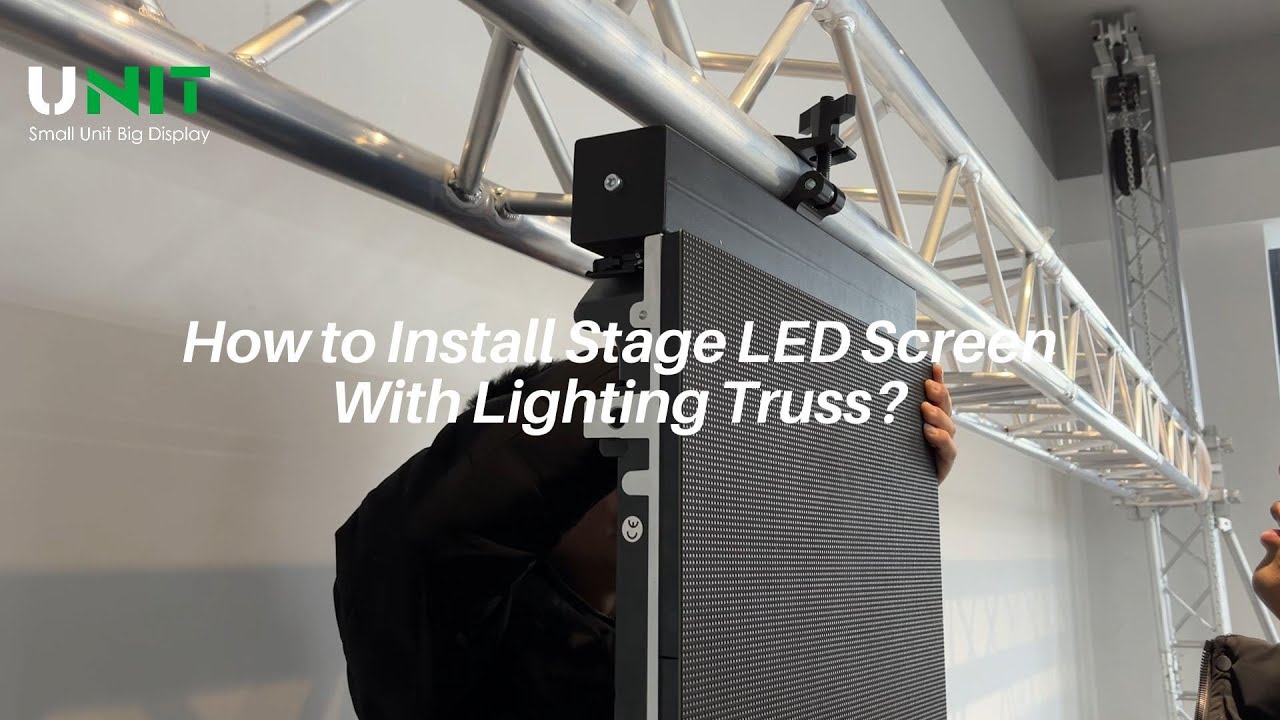
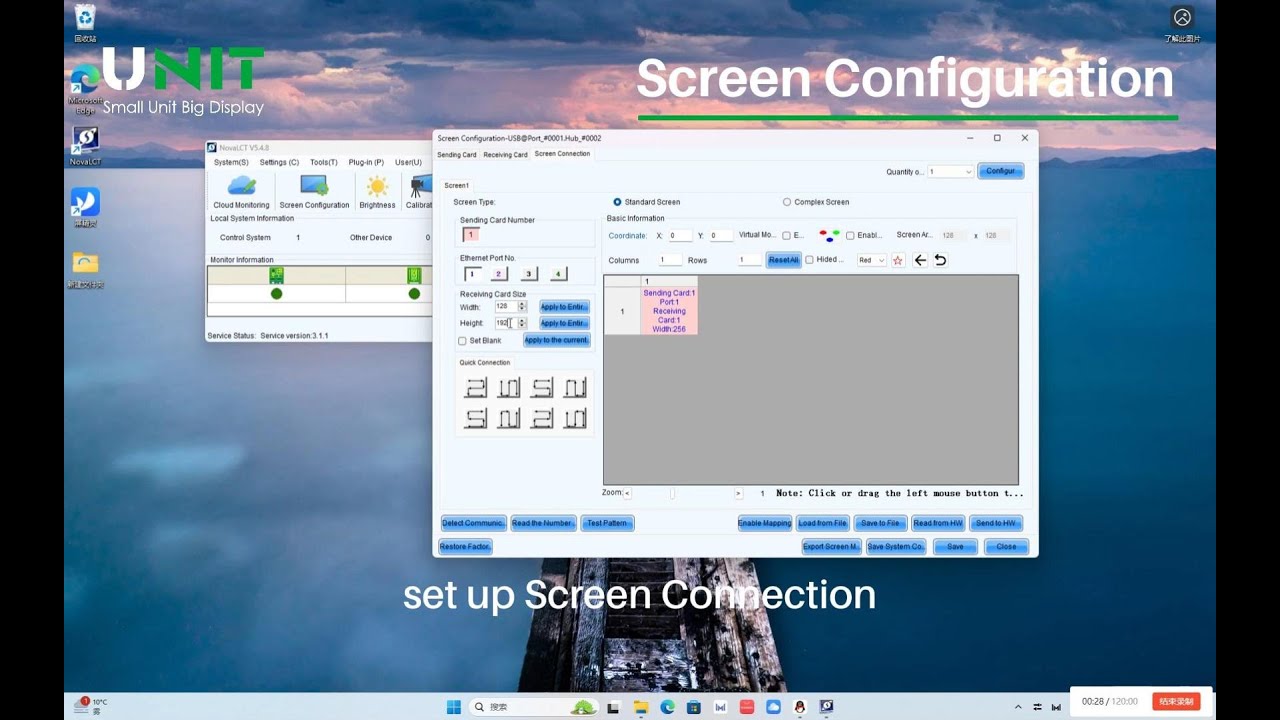
Testing should be completed before the audience enters the venue.
A basic commissioning checklist includes:
| Check | What to Verify |
| Power | Stable power supply and secure power connections |
| Signal | No signal loss or incorrect cabinet mapping |
| Modules | No dark, flickering, or abnormal modules |
| Color | Consistent brightness and color across cabinets |
| Cabinet Alignment | No visible gaps or uneven cabinet surfaces |
| Content | Correct resolution, aspect ratio, and playback |
| Camera Test | No obvious flicker or scanning issues when filmed |
| Structure | Cabinets and supporting structure are securely installed |
For concerts, livestreams, and professional video production, perform a camera test under the actual stage lighting conditions whenever possible.
Regular maintenance helps maintain image quality and reduce unexpected failures during events.
(1) Clean the Screen
Remove dust and dirt from the LED display using the cleaning method recommended by the manufacturer.
Avoid abrasive materials or excessive pressure on the LED surface. For rental displays, inspect the cabinet and module surfaces after each event before packing and transportation.
(2) Check Ventilation and Temperature
Make sure ventilation openings and cooling components are not blocked.
For displays with fans or active cooling systems, check for dust buildup and abnormal fan operation. Outdoor installations should receive additional attention when operating temperatures change significantly.
(3) Inspect Power and Signal Connections
Check power cables, signal cables, connectors, and interfaces regularly.
Loose or damaged connections can cause intermittent signal loss, flickering, black modules, or unstable cabinet operation.
For rental LED backdrops, inspect connections during both installation and dismantling.
(4) Check Modules and Cabinets
Inspect LED modules and cabinets for:
Replace damaged components according to the manufacturer’s maintenance procedure.
(5) Keep Control Software and Configuration Files Updated
Keep the compatible LED control software, controller configuration, and firmware updated when required.
Before making major software or firmware changes, back up the current configuration. This can make troubleshooting and system recovery easier if a problem occurs.
For regular event use, the following checklist can be used before and after installation:
Before the Event
After the Event
Proper installation and maintenance can reduce downtime, protect the LED modules, and help maintain consistent display performance throughout the service life of the stage LED backdrop screen.
UNIT LED provides a comprehensive, efficient and flexible LED display application solution to meet the needs of different stage scenes.
Indoor scene
If the audience is watching at a close distance, such as theaters, conference rooms, etc., it is recommended to use small pixel pitch products, such as P2.5 and below specifications.
Even if you watch at a close distance, there will be no obvious graininess, which meets the strict requirements of high-end performances, conference presentations, etc. for picture quality.
Outdoor scene or large venue
If the audience is watching at a long distance, consider P4-P8 pixel pitch products.
Taking music festivals and large concerts as an example, this type of pitch product has high brightness and wide viewing angle.
It can ensure that the audience in the back row can also clearly see the screen content, while taking into account cost and display effect.
Lightweight and structural strength
Use die-cast aluminum cabinets, such as the common 500mm×500mm and 500mm×1000mm cabinets. A single box is light and easy to carry by one person.
The die-cast aluminum material has high strength and good toughness.
It is not easy to deform during frequent transportation, ensuring the stability of long-term rental use.


Splicing accuracy and flexibility
The high-precision processing technology makes the box size tolerance less than 0.2mm, ensuring seamless splicing and natural and smooth picture transition.
The arc scale edge lock can be spliced with any arc from -15 degrees to 15 degrees, which is convenient for creating diversified stage shapes such as inner arc, outer arc, right angle, etc.
Outdoor use
Outdoor performances are vulnerable to wind and rain, and a display screen with a protection level of IP65 or above must be selected.
Special indoor environment
IP50 protection level can prevent large particles of dust from entering and extend the service life of the display screen.
Suitable for places with high ceiling space, such as theaters and auditoriums.
The LED display screen can be hung above the stage with professional hoisting equipment to save ground space.
At the same time, it can enable the audience to get a better viewing angle, especially suitable for showing panoramic pictures or important close-ups.
Commonly used in large outdoor performances such as music festivals and concerts.
The display cabinets are stacked and installed on the ground in front of the stage.
The height and angle can be flexibly adjusted according to the stage terrain to enhance the stability of the screen.
| Event Type | Recommended Screen Type | Suggested Pixel Pitch | Key Priority |
|---|---|---|---|
| Indoor conference | Flat rental LED screen | P1.9–P2.6 | Sharp text, clean branding, close-view clarity |
| Wedding stage | Flat or curved indoor LED backdrop | P2.6–P2.97 | Elegant visuals, photo-friendly background, flexible sizing |
| Indoor concert | Main backdrop + side screens | P2.6–P3.9 | Immersive content and strong on-camera performance |
| Outdoor music festival | High-brightness rental LED screen | P3.9–P4.8 | Sunlight visibility, weather resistance, fast setup |
| Product launch | Fine-pitch or premium rental LED backdrop | P1.9–P2.6 | High-definition product visuals and premium stage look |
| Church or auditorium | Fixed or semi-fixed LED backdrop | P2.6–P3.9 | Long-term use, stable operation, balanced cost |
The right size depends on stage width, audience distance, and the type of content you want to show. A small indoor event may only need a compact backdrop, while concerts and outdoor festivals often need much larger screens for clear long-distance viewing.
There is no single best pixel pitch for every event. For close indoor viewing, smaller pixel pitches such as P2.5 is often better. For medium and large rental stages, P2.97, P3.91, and P4.81 are common practical choices.
Yes, but the screen should be designed for outdoor use. Outdoor LED backdrop screens need higher brightness and proper protection against rain, dust, and temperature changes.
Renting is usually better for short-term events, seasonal projects, and companies that do not use the screen frequently. Buying is more suitable for venues, churches, studios, and event companies that need long-term use.
A fixed LED backdrop is designed for permanent installation and long-term operation. A rental LED backdrop is lighter, easier to transport, and faster to assemble and disassemble for temporary events.
Choosing the right stage LED backdrop screen depends on your event type, screen size, viewing distance, installation space, and content requirements. The right configuration helps ensure clear images, stable performance, and efficient installation.
For concerts, festivals, conferences, and other live events, factors such as pixel pitch, brightness, refresh rate, and maintenance method should be considered before selecting an LED screen.
If you need a stage LED display solution, our team can recommend a suitable LED screen based on your project requirements and application needs.
Learn about concert LED display types, pixel pitch, brightness, refresh rate, and how to choose the right screen for concerts and live events.

UNIT provides smart and creative conference LED screen solutions with best price for effective communication and next-level meetings.

Professional wedding LED display solutions with high-resolution visuals, flexible sizes and elegant designs to create unforgettable and immersive wedding stages.